
They might not be the ones who first told the stores, but Jacob and Wilhelm Grimm
 were the first to popularize retellings. Newcomer Jessica Day George re-examined their stories in Princess of the Midnight Ball
 and Princess of Glass
 . Gail Carson Levine made a name for herself with Ella Enchanted
 and now has an entire collection of fairy tales retold. Shannon Hale takes retellings to a new level by pushing past the "...happily ever after" and seeing what happens after the after like with her Books of Bayern
 and Book of a Thousand Days
 . Though she wrote The Outlaws of Sherwood
 and several Greek myth-based novels
 , Robin McKinley is best known for her fairy tale retellings, including Beauty
 , The Door in the Hedge
 and Spindle's End
 . Alex Flinn gives Grimms' tales both a modern twist and a new perspective with male protagonists in Beastly
 , A Kiss in Time
 and Cloaked
 .
.Donna Jo Napoli finds inspiration in many fairy tales such as Zel
 (Grimms' Rapunzel), Bound
 (a Chinese Cinderella-esque fairy tale) and Sirena
 (the Greek myth of the Sines). But she is the only author I know who has examined the Viking legend of the captive Irish princess in Hush
 . She has duel citizenship in the United States and Italy, which might account for her love of exploring Italian legends, including her newest novel The Wager
 . One of the best parts of her books? The "...happily ever after" is rarely what you would expect.
Although she's been creating beautiful picture books for years, it wasn't until Where the Mountain Meets the Moon
 received a Newbery Honor last year that Grace Lin burst onto the scene as the authority on Chinese fairy tales. Her traditional illustrations and knowledge of Chinese culture makes her a stand-out among all the other authors writing Asian-inspired fantasy.
With dozens of movies
 , TV series
 and songs
 , Robin Hood is a mainstay in Anglo-Saxon folklore. Best known for her contemporary work, Cynthia Voigt wrote the Robin Hood-inspired Kingdom Series, Beginning with Jackaroo
 . The Kingdom series tells the tale of a link of brave women who do more than just steal from the rick and give to the poor--they gain the trust of kings and change a nation.
The Arthurian legend is a common theme in fantasy. From Mark Twain with A Connecticut Yankee in King Arthur's Court
 to Meg Cabot's Avalon High manga series
 , a lot of authors have gotten in on the mid evil action. (Of course you can't forget Monty Python's musical parody
 and the much more tragic real-life story of JFK's Camelot
 .) Winner of both a Newbery Medal and the Newbery Honor, Susan Cooper's The Dark Is Rising Sequence
 provides one of the most captivating interpretations of the Camelot tale.
With her own twist on the Arthur story
 set in a post-apocalyptic wasteland, Pamela F. Service has written sci-fi versions of many fairy tales and legends. Weirdos of the Universe, Unite!
 has to be one of my favorites as in brings together the mythical legends of Norway, Russia and America. I also just heard about another Scandinavian fairy tale retelling--Plain Kate
 by Erin Bow.
And Jane Yolen has written it all. She'd done Arthur (The Young Merlin Trilogy
 ), Robin Hood (Sherwood
 ), Grimms (Briar Rose
 ). I mean, this woman even wrote an anthology called Favorite Folktales from Around the World
 and wrote the forward to Fearless Girls, Wise Women & Beloved Sisters: Heroines in Folktales from Around the World
 (one of my personal favorites). And that doesn't even begin to touch on the original fantasy books and numerous picture books she had written. She's like the Grimm brothers, Hans Christian Anderson and J.R.R. Tolkien all rolled into one.




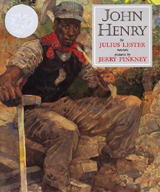


 was more than just a folk song but an actual railroad worker at the turn of the 20th century, who's to say the rest of these myths aren't based in a little truth.


