Friday, October 22, 2010

Fantasy Freak Week: Friday Five

Do I plan on proving that fantasy written for children is better than fantasy written for adults? Of course not. Just because my opinion is the correct opinion doesn't mean it can be proven. Here are five reasons MG/YA fantasy is far superior to adult fantasy.

Better editing: Adults read to escape while kids read to learn. Even if it is unintentional on their part, every time a child picks up a book, they're expanding their vocabulary, improving critical thinking and discovering new concepts at a much higher rate than adults do when they read, which means editors have to work twice as hard to make sure kids don't find typos, plot holes and faulty logic.

Faster pacing: Shorter attention span, lower comprehension levels and early bed times mean kids don't spend as much time reading in one sitting like adults do. Children's lit is usually much shorter, which forces writing to be more concise and conflict resolution to happen faster.

Stronger female leads: Females not used as sex symbols are an anomaly in adult fantasy, yet they are the driving force in teen fantasy. Only as the demographic shifts to more male readers as the audience gets older do you find fewer female leads and more females as mysterious soothsayers, damsels in distress and evil queens.

Character first, setting second: Maybe it's because of the word-count restriction thing, but children's authors spend less time establish worlds and rules and more time building characters. In order for a young reader to connect with and keep reading a book, they have to relate to the main character. Adults, however, tend to read a book even with a despicable main character if they find the concept interesting.

Truer to motive: While there are always exceptions, children's fantasy isn't trying to make a political point or driven by societal morals like so much adult fantasy is. Of course they are exceptions to this (His Dark Materials by Philip Pullman comes to mind), but political commentary tends to go over kids' heads or even turn off parents and librarians who are the primary book buyers.

A for a special Friday Five bonus...

Crossover authors: Don't be fooled. While many best-selling adult authors are amazing writers, they can't always pull of younger characters and vice-versa. Here are five authors who cross the age divide, some more successfully than others. But I'll leave it up to you to decide who does it best.

Neil Gaiman

Brandon Sanderson

Carrie Vaughn
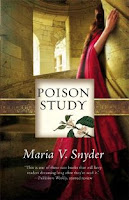
Maria V. Snyder

Orson Scott Card

Thursday, October 21, 2010

Fantasy Freak Week: Illustrations of world mythology

It used to be the myths were the means to explain the world around us. How the sun streaks across the sky in Helios's chariot of fire. That the Nile River floods every year because of the tears Isis wept for Osiris. Why the wolf sang the moon into the night sky. Somehow, over time, science has become the means for debunking myths rather than the reason for creating them. Yet the magic of some stories manage to endure and captivate children all over the world.

The Boy of the Three-Year Nap by Diane Snyder
Japan

The Legend of Lao Tzu and the Tao Te Ching by Demi
China

Rikki-Tikki-Tavi by Rudyard Kipling
India

The Tale of The Firebird by Gennady Spirin
Russia

Golem by David Wisniewski
Eastern Europe

Noah's Ark by Peter Spier
Middle East

Anansi the Spider by Gerald McDermott
West Africa

Saint George and the Dragon by Margaret Hodges and Trina Schart Hyman
Britain

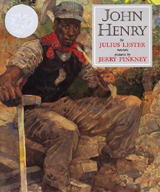
John Henry by Julius Lester
North America

Moon Was Tired of Walking on Air by Natalia M Belting
South America

And all it takes is a little faith to believe these myths are real. After all, if John Henry was more than just a folk song but an actual railroad worker at the turn of the 20th century, who's to say the rest of these myths aren't based in a little truth.

Wednesday, October 20, 2010

Fantasy Freak Week: The Power of Harry Potter

I can't talk about fantasy without eventually addressing Harry Potter. I won't pretend I'm some kind of Harry Potter authority, but I will admit to attending more than a few midnight premieres
(Here we are opening night of HP4. Those are Harry Potter stickers we have all over our faces, by the way, not remnants of a food fight.)

owning a boxful of memorabilia
(Only select items are pictured; the rest are stored away. As a disclaimer, I received most of these items as gifts. It's kind of a default for most people during the holiday season, so I started asking for kitchen items instead.)

making my own Rita Skeeter costume
(I made this costume for the HP7 book release party Midnight Muggle Madness at the Salt Lake City Public Library. I was a library volunteer at the time and working as a freelance reporter, so Rita seemed like the obvious choice.)

and rereading the books so often I've had to replace a couple
(HP3 still needs to be replaced, but there are so many other books to buy. I can deal with chapters 5-7 coming loose as long as they don't fall out.)

but I haven't visited the chat boards at mugglenet.com or rummaged around J.K. Rowling's desk since college. I still got teary eyed when watching the trailer for the new movie, knowing the dynasty is coming to an end, but the troubled teen wizard is no longer such a big part of my life.

Yet strangely, he's become an even bigger part of my life. J.K. Rowling has become a little like Shakespeare in that her writing is often quoted without people even realizing it. Exes are referred to as "He Who Shall Not Be Named," people now know how to pronounce "Hermione" when reading A Winter's Tale in English class, and whenever someone wears a gold and red scarf, they inevitably hear someone say "Go, Go Gryffindor!"

I've been reading those books since high school, which means the kids reading them today weren't even born when the first one was published. Are they the best books ever written? Probably not. Will the story of Harry and the gang lead you into a life of greater enlightenment? Possible, but not likely. Has the world forever been changed by The Boy Who Lived? Err...

But have kids been encouraged to read more challenging books, and have parents changed the way they interact with their children on a literary level? Most assuredly. And to me, if even one child becomes a better reader, a more conscious friend, a stronger person for reading those books, J.K. Rowling deserves her millions.

Tuesday, October 19, 2010

Fantasy Freak Week: Where have all the young men gone?

You might have noticed my list of YA fantasy books yesterday was...err...slightly gender bias. That was not intentional on my part, but it called to attention a certain hole in YA fantasy. Fantasy books for teenage boys are almost completely missing from the market.

There are so many great Middle Grade fantasy series out there for boys:
Artemis Fowl Series by Eoin Colfer (2001-current)

Spiderwick Chronicles by Tony DiTerlizzi and Holly Black (2003-2004)

Percy Jackson and the Olympians by Rick Riordan (2005-2009)

Fablehaven Series by Brandon Mull (2006-current)

There are also a lot of YA "girl" fantasy books teenage boys would like if they gave them a change:
Will of the Empress by Tamora Pierce (2005)

Peeps Duology by Scott Westerfeld (2005-2006)

Wake Series by Lisa McMann (2008-2010)

Graceling Series by Kristin Cashore (2008-current)

Voices of Dragons by Carrie Vaughn (2010)

But the fact is, boys stop reading "kid" books once they get to high school. So many publishers disguise young adult fantasy by publishing it for adults and then marketing it to teenage boys. Don't believe me that many YA fantasies are masquerading as adult fantasies? One of the most common themes in fantasy is a coming-of-age journey that exposed the protagonist to the world:
The Authurian Saga by Mary Stewart (1970-1995)

Xanth Books by Piers Anthony (1977-current)*

Shannara Series by Terry Brooks (1977-current)*

Wheel of Time Series by Robert Jordan (1990-current)*

Stardust by Neil Gaiman (1998)

While this might be a financial decision for publishers (adult books sell way better than YA lit), the outcome isn't negative. It bridges that no-mans land between ages 16 and 21 where a lot of boys stop reading, and it opens deserving books to a larger market of readers.

Very few authors are able to break the mold and write fantasy books published in the YA market both girls and boys enjoy. To those brave authors, agents, editors and publishers, I stand and applaud:
The Earthsea Cycle by Ursula K. Le Guin (1968-2003)

Discworld Novels by Terry Pratchett (1983-current)*

The Heir Chronicles by Cinda Williams Chima (2006-current)

And I can't think of any more past those three, but I welcome your suggestions.

*There are like a gazillion books in these series, so I've only included the first two and the last two.